 how-to
How Do You Fix Poor Drainage Around a House?
Last Updated: November 5, 2026
Quick Summary
To fix poor drainage, first diagnose the cause with a site assessment after heavy rain, separating roof runoff from groundwater and checking soil, slope, and blocked drains. Then start with the cheapest fix that solves it, such as extending downspouts or regrading soil away from the foundation.
- Clean gutters twice a year and check them after every big storm.
- Dig a test hole about a foot deep and fill it with water to test soil drainage.
- Aim for the ground to drop roughly an inch per foot for the first several feet from the wall.
- Have underground utilities located through the 811 one-call service before any excavation.
- Call a landscape designer for yard water; call a foundation specialist if water enters the house.
Table of Contents
- Start With a Site Assessment to Find Where Water Pools
- Clear Gutters and Downspouts to Stop Roof Runoff at the Source
- Protect the Drainage Around Your House Foundation
- Practical Ideas to Drain Water Away From House Walls and Beds
- Design a Rainwater Drainage System That Fits Your Lot
- Know Who to Call for Drainage Problems in Your Yard
- Schedule a Drainage and Landscape Consultation in Castle Rock or Parker
- Frequently Asked Questions
Start With a Site Assessment to Find Where Water Pools
Most drainage fixes fail because homeowners skip the diagnosis. Before you dig, trench, or buy a single length of pipe, walk your property and find where water actually goes. Poor drainage is a symptom, not a cause, so find the cause first.
A useful site assessment answers three questions: where does water enter the property, where does it collect, and where does it leave? Work through the steps below in order. Each step narrows the list of likely causes so you do not pay for a French drain when a downspout extension would have solved the problem.
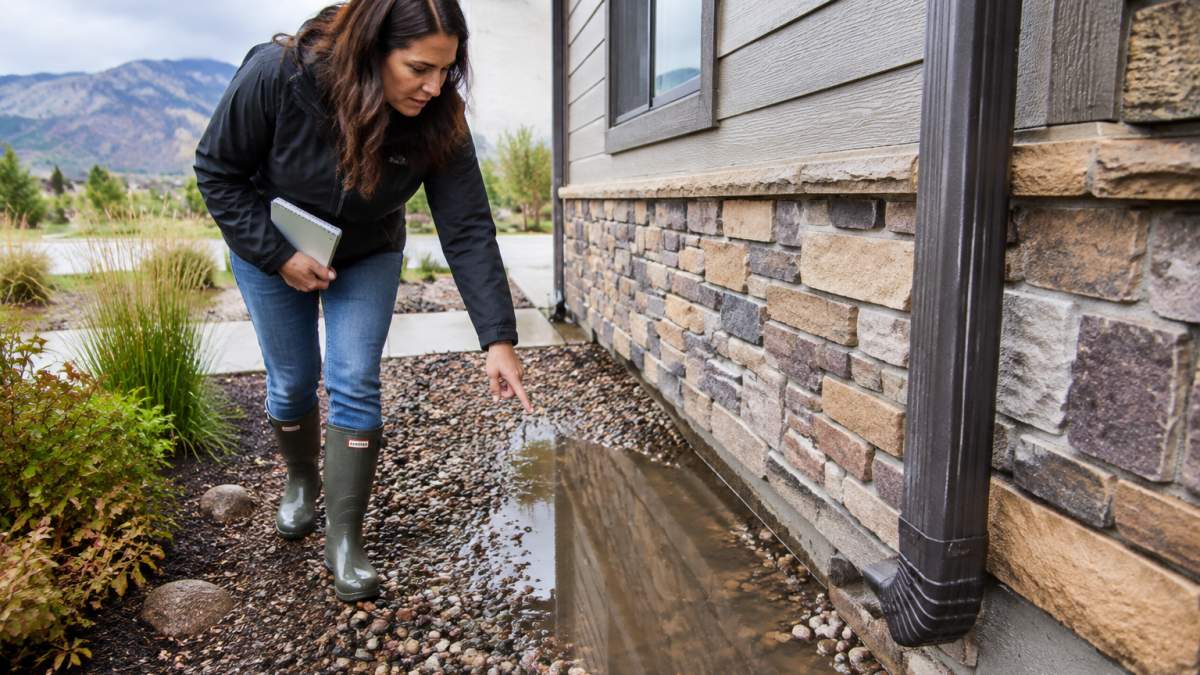
Step 1: Walk the Property After a Heavy Rain
The best time to inspect your yard is during or right after a storm. Put on boots and follow the water.
Watch for these signs:
- Standing water that lingers more than a day
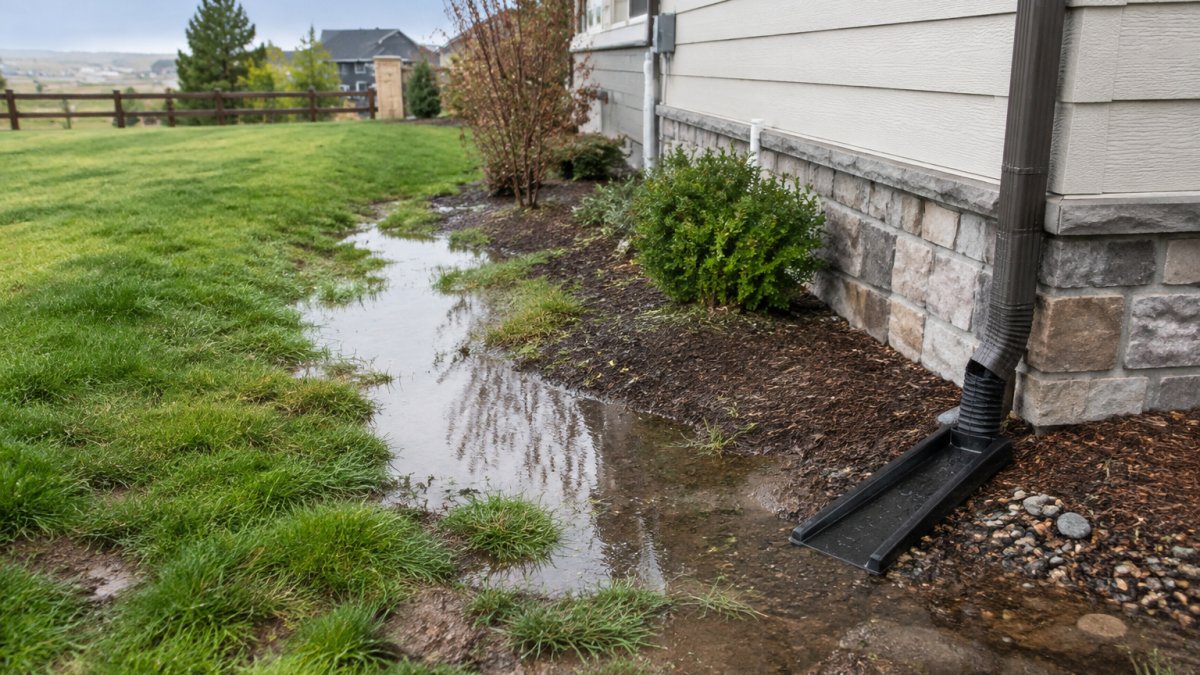
- Water pooling along the foundation
- Soggy spots in the lawn that never dry out
- Mulch floating out of beds
- Soil stains on the lower siding or crawl space walls
Take photos and note the direction water travels. It usually follows the slope of the land, not the path you expect.
Step 2: Separate Roof Runoff From Groundwater
This is the step most homeowners skip, and it decides which fix you need. Stand at each downspout outlet during a storm. If water sheets across the ground from the roof, you have a roof-runoff problem.
A simple test: on a dry day, run a hose at each downspout for ten minutes and watch where the water goes. If it pools near the foundation, the fix is at the roof and downspout, not underground. If the ground stays wet for days after rain with no roof input, the cause is below the surface.
Step 3: Check the Soil and Slope
Clay-heavy soil holds water. Sandy soil drains fast. Dig a small test hole about a foot deep and fill it with water. If it still holds water hours later, you have a drainage problem in the soil itself.
Then check the slope. Water should move away from the house, not toward it. A common mistake is assuming the builder graded the lot correctly. Many homes settle over time, and low spots form where water collects.
Step 4: Rule Out a Blocked Drain or High Water Table
If your lot already has a drain, inlet, or dry well, confirm it is not clogged before you design anything new. A blocked drain mimics every other drainage problem. Look for sediment, roots, and debris at the inlet and at the outlet.
A high water table shows up as water that rises in a test hole overnight or springs that appear after wet seasons. That condition usually calls for a different solution than surface grading, and it is worth flagging before you excavate.
Step 5: Write Down the Diagnosis Before You Choose a Fix
By the end of the walk, you should be able to name the cause in one sentence: roof runoff near the northwest corner, a settled low spot in the side yard, compacted soil in the beds, or a blocked drain at the driveway. That sentence is your design brief. If you cannot name the cause, do not buy materials yet.
Clear Gutters and Downspouts to Stop Roof Runoff at the Source
Roof runoff causes more foundation damage than most homeowners realize. A clogged gutter sends water straight down the wall. Clean gutters twice a year, and check them after every big storm.
Then look at your downspouts. If they dump water within a few feet of the house, you have a problem. Add downspout extensions so water lands well away from the foundation.
Watch out: burying a downspout without a proper outlet or slope traps water underground and can back up into the gutter system.
Protect the Drainage Around Your House Foundation
Drainage around house foundation failures usually start small. Water seeps into the soil next to the wall, saturates it, and pushes against the foundation. Over time that pressure causes cracks and basement leaks.
Here is what we check first:
- Soil grade along each wall
- Downspout discharge points
- Window wells and areaways
- Any visible cracks or efflorescence
The goal is simple: keep surface water moving away from the walls. If your soil has settled and now slopes toward the house, regrading is the first step. Add topsoil to build up the grade, then compact it so it sheds water.
Practical Ideas to Drain Water Away From House Walls and Beds
You do not always need a major project. Some of the best ideas to drain water away from house are quiet, low-cost fixes.
- Regrade the soil so it slopes away from the walls
- Extend downspouts to a safe discharge point
- Fill low spots with topsoil and compact it
- Add a drainage swale to channel water around a bed
- Build a dry creek bed to move water and look intentional
- Aerate compacted soil so water soaks in
- Add compost to improve how soil handles water
Each of these addresses poor drainage at a different scale. Start with the cheapest fix that solves the problem, then escalate only if water still pools.
SCHEDULE YOUR COMPLIMENTARY CONSULTATION TODAY (303)-520-2694 →
Design a Rainwater Drainage System That Fits Your Lot
A rainwater drainage system should match your lot, not a template. Two homes on the same street can need completely different solutions based on soil, slope, and how the house sits. The design work comes down to three decisions: how much water you are moving, where it is safe to send it, and which structure fits the site.
Estimate the Runoff Before You Size Anything
You do not need engineering software to get close. Add the driveway and patio areas that drain toward the same low spot, and you have a working number for how much water your system must handle. Size the pipe and trench for a heavy storm, not an average one, because undersized systems back up exactly when you need them most.
Choose Safe Discharge Locations
Where the water goes matters as much as how it gets there. Discharge to a graded area, a dry well, or a swale that carries water to a lawful outlet. Keep discharge on your own property where possible, and avoid sending water onto a neighbor's lot, a public walkway, or a slope that erodes. A common pattern is a system that works perfectly until the outlet silts in or the neighbor builds a fence; plan the outlet so you can inspect and maintain it.
French Drains, Swales, and Dry Creek Beds
A French drain is a gravel-filled trench with a perforated pipe that collects and moves groundwater (Yard drainage issue). It works well in low spots and along foundations.
A swale is a shallow, grassy channel that guides surface water around a problem area. It is cheaper than a French drain and blends into the landscape.
A dry creek bed does the same job but looks like a design feature.
A channel drain at a driveway or patio edge catches sheet flow before it reaches the house.
| Solution | Best For | Effort | Maintenance |
|---|---|---|---|
| Downspout extensions | Roof runoff near walls | Low | Low |
| Regrading | Soil sloping toward house | Medium | Low |
| French drain | Groundwater and low spots | High | Medium |
| Swale | Channeling surface water | Medium | Low |
| Dry creek bed | Moving water with style | Medium | Low |
| Channel drain | Sheet flow at hard surfaces | Medium | Medium |
Check Utilities and Permits Before You Dig
Before any excavation, have underground utilities located through the 811 one-call service (811 Before You Dig). Confirm where the sewer, water, gas, electric, and irrigation lines run.
Watch out: a French drain that discharges uphill or into a buried outlet with no fall will hold water and can back up into the foundation area it was meant to protect.
See our recent projects to judge how these systems look once finished.
Know Who to Call for Drainage Problems in Your Yard
Wondering who to call for drainage problems in yard? Start with a landscape designer who understands grading and water flow, not just a contractor who digs trenches.
A contractor can build what you ask for. See our recent projects to view the drainage and landscape services we offer. A designer tells you what your yard actually needs.
If water is entering the house, call a foundation or waterproofing specialist first. For yard and surface water, a landscape designer is the right call.
Schedule a Drainage and Landscape Consultation in Castle Rock or Parker
Fixing poor drainage is not about one product. It is about reading your lot, choosing the right fix, and building it so water moves where it should. That is the work we do at Red Gate Farm Design.
Red Gate Farm Design creates bespoke residential landscapes that elevate Colorado architecture, with each design tailored to the client and a timeless aesthetic.
Ready to solve the water problem and elevate your outdoor space? Get in touch with our team and schedule a complimentary consultation. Call (303)-520-2694 today.
Frequently Asked Questions
What is the best soil additive to improve drainage?
Compost is the most reliable amendment for most yards because it opens up compacted soil and helps water move through instead of sitting on top. In heavy clay areas, coarse sand mixed with compost can help, but sand alone can make clay harder. For lawns, core aeration followed by compost topdressing is a practical first step. Test your soil before adding anything, and apply amendments in the fall so they break down before spring runoff.
How should water be directed away from a home's foundation?
Water should leave the roof through clear gutters and downspouts, then travel across a graded slope that falls away from the walls. Downspout extensions carry roof runoff several feet past the foundation, and a shallow swale or buried drain can move it farther if the lot is flat. Keep soil graded so the surface sheds water rather than holding it against the house. Where soils vary from clay to rocky, a site assessment before grading can help avoid costly fixes later.
Who should you call for drainage problems in a yard?
Start with a landscape designer or drainage specialist who can assess the whole property, not just one soggy spot. A designer reads the slope, soil, and roof runoff together and plans a rainwater drainage system that fits the architecture and the lot. If water is entering the basement or undermining the foundation, bring in a structural engineer or foundation specialist as well. For permits or utility locating before digging, check with your local building department.
What are common mistakes in home drainage?
The most common mistakes are extending downspouts only a foot from the house, grading soil back toward the foundation, and installing a French drain without checking where the outlet discharges. Another is adding sand to clay soil, which can create a harder layer. Skipping utility locating before digging is both risky and, in many areas, against local rules. A short assessment before any work prevents most of these problems and keeps the fix working for years.
Water pooling against your foundation will not fix itself, and the longer it sits, the more it costs. Red Gate Farm Design brings bespoke design and real drainage knowledge to every property we touch, from grading and swales to dry creek beds that turn a problem area into a feature. We tailor each plan to your lot and your architecture so the fix lasts and the landscape looks like it belongs. Get started with Red Gate Farm Design and turn your drainage problem into a landscape you are proud of.