 how-to
How to Design a Colorado Mountain Landscape That Lasts
Quick Summary
Start with a site assessment of slope, drainage and sun exposure, then design around existing trees and views. Choose Colorado native plants matched to your elevation and microclimates, and build in drought tolerance and erosion control. Plan in phases, with drainage and grading first, so the colorado mountain landscape lasts through every season.
- Measure slope, drainage paths and sun exposure before drawing any design.
- Keep mature trees and frame the views you want rather than clearing early.
- Match native plants to elevation bands, then adjust for microclimates on your lot.
- Group plants by water need and use drip irrigation instead of spray heads.
- On steep yards, control water with terraces and drainage before relying on plants.
Table of Contents
- Start With a Site Assessment: Slope, Drainage and Sun
- Step 1: Designing a Colorado Mountain Landscape Around Existing Trees and Views
- Step 2: Choosing Colorado Native Plants for Landscaping by Elevation
- Step 3: Building Drought-Tolerant Landscaping Ideas Into Your Plan
- Step 4: Planning a Landscape Design for Sloped Yards Without Erosion
- Step 5: Layering Plants, Color and Colorado Mountain Landscape Ideas for Year-Round Interest
- Budgeting, Phasing and Wildfire-Resilient Maintenance for Your Project
- Booking Your Site Assessment With Red Gate Farm Design in Castle Rock or Parker
- Frequently Asked Questions
How to Design a Colorado Mountain Landscape That Lasts
Last Updated: November 8, 2026
Start With a Site Assessment: Slope, Drainage and Sun
At Red Gate Farm Design, we start every mountain landscape with the ground itself. A design that ignores slope, drainage and sun exposure will struggle, no matter how good the plant list looks on paper. The first assessment shapes most of what follows.
Think of this stage as reading the site before you draw on it. You are looking for how water moves, where the sun falls, and where cold air settles. Those answers shape every decision after this one.
Reading Your Grade and Topography
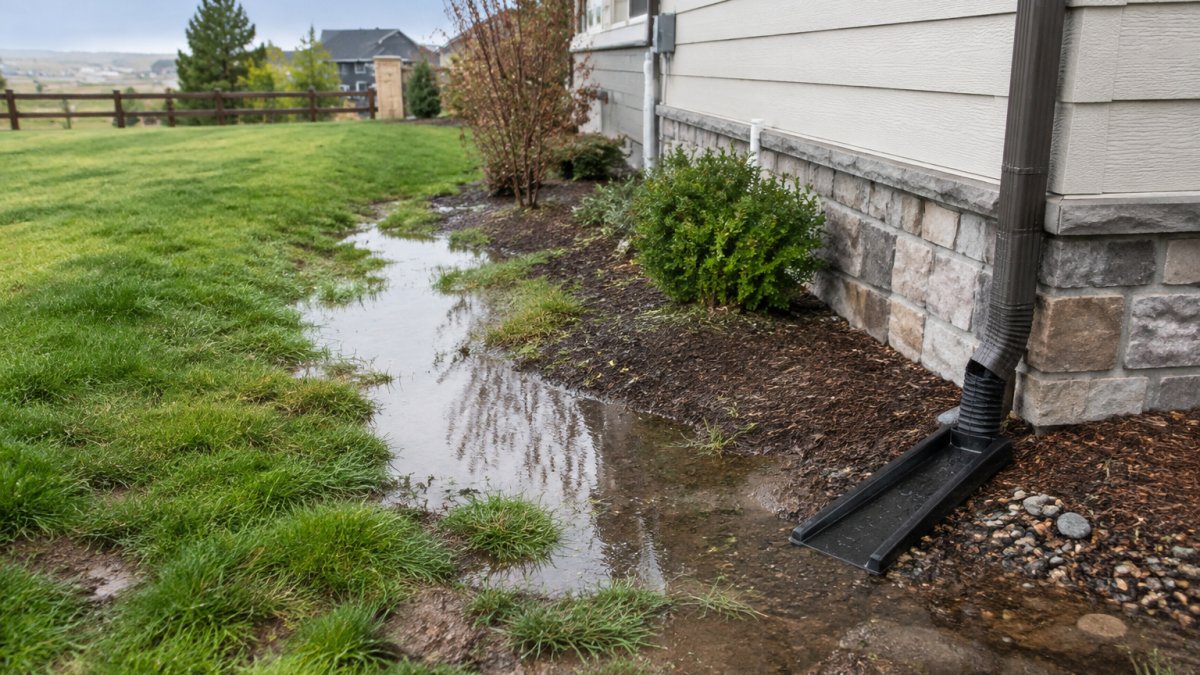
Grade is the steepness of the land, and it controls how water and soil behave. Walk the lot after a rain if you can. Note where water pools, where it runs fast, and where soil washes away.
Start with these checks:
- Measure the slope in key areas, such as the back of the house and the view corridor.
- Mark spots where water collects or flows across walkways.
- Look for natural drainage paths, even dry ones.
- Note any existing retaining walls and their condition.
Steep areas need different plants and structures than flat ones. See the kinds of mountain-landscape projects we have completed on The Fairway Estate for examples of phased, wildfire-conscious work. A slope that looks gentle can still erode quickly once a lawn or bed is cut into it.
Mapping Sun, Wind and Frost Pockets
Mountain sites change fast across short distances. A south-facing bank can run several degrees warmer than a shaded north side. Frost settles in low spots, and wind funnels through gaps between buildings.
Track these conditions over a full day, and if possible across a few seasons:
- Where sun hits in the morning, midday and evening
- Where wind hits hardest
- Where frost lingers longest in spring and fall
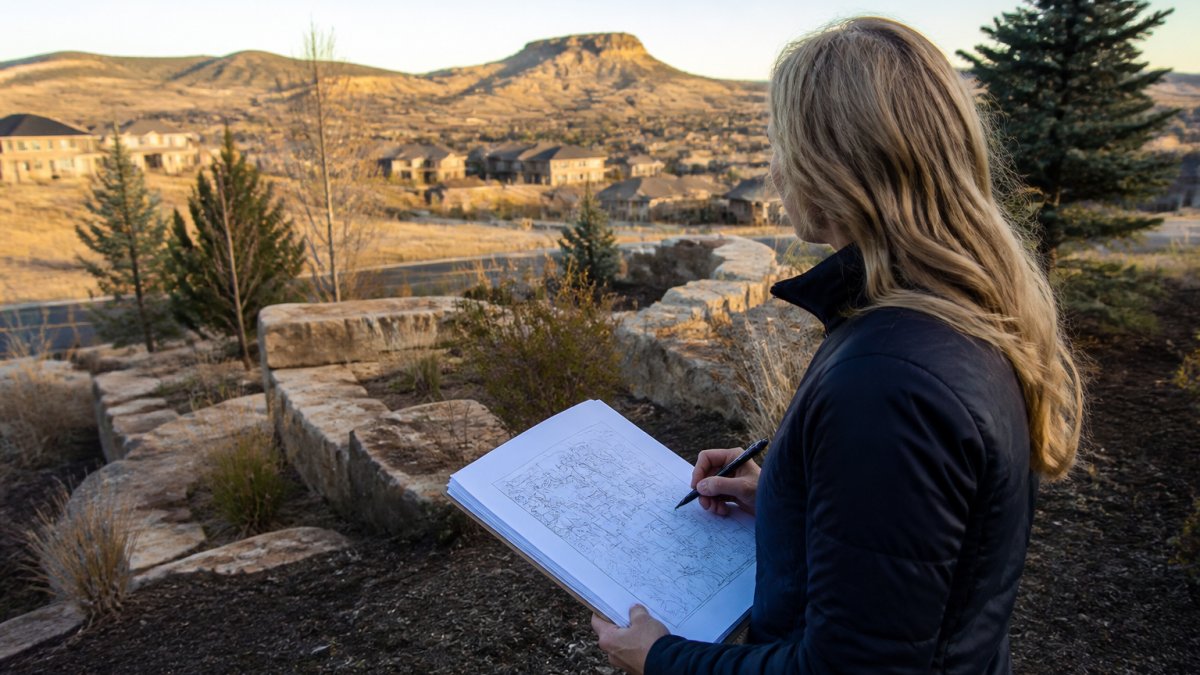
Sketch these zones on your site plan. Plants placed in the wrong zone may struggle or fail. Plants placed in the right one tend to thrive with less help.
Step 1: Designing a Colorado Mountain Landscape Around Existing Trees and Views
Start your design around what already exists. Mature evergreens and established views are hard to replace, so build the plan around them rather than removing them.
A common mistake is clearing too much at the start. Homeowners often remove trees to open a view, then lose the shade, wind protection and soil stability those trees provided. Keep the strongest specimens and frame the views you want.
Follow these steps:
- Survey every tree, noting species, size and health.
- Mark the views from the house, patio and main windows.
- Decide which trees to keep, prune or remove.
- Place new outdoor rooms, such as seating areas, where they capture those views.
When you plan around trees, protect their root zones. Avoid heavy grading, soil piling or new paving near the trunk. Damaged roots can weaken a tree for years.
Step 2: Choosing Colorado Native Plants for Landscaping by Elevation
Elevation changes which plants will survive, but so do exposure, wind, and frost pockets, conditions that vary block by block in Castle Rock and Parker.
Elevation and exposure vary across the Castle Rock and Parker areas, so use local elevation bands as a starting filter, then adjust for the microclimates on your lot.
- Lower foothills (5,500-6,200 feet, common in Parker): Favor drought-tolerant shrubs and grasses that handle heat and dry air. Good candidates include little bluestem, blue grama, and native shrubs like three-leaf sumac and rabbitbrush. These plants tolerate reflected heat from driveways and south-facing walls.
- Mid-elevations (6,200-7,000 feet, common in Castle Rock): Mix native conifers such as ponderosa pine and juniper with flowering shrubs like native potentilla and mountain mahogany for year-round structure. Add native perennials such as blanket flower and penstemon for summer color.
- Higher sites (above 7,000 feet): Choose low, cold-hardy plants and ground covers that resist wind and frost. Creeping juniper, kinnikinnick, and native bunch grasses work well where the growing season is short.
Beyond elevation, map the microclimates on your property. A south-facing bank can run several degrees warmer than a shaded north side, and frost settles in low spots. Wind funnels through gaps between buildings and along ridgelines, drying soil and battering tender growth.
Ask a local nursery which species are native to your elevation and exposure before you buy. Plants labeled only as "hardy" may still be a poor fit for your site.
Watch out: buying plants solely by USDA hardiness zone can backfire, because zone maps don't account for the wind, soil, and frost patterns that define mountain microclimates.
Match your plant choices to your elevation band, then adjust for the microclimates on your lot. These bands cover the Castle Rock and Parker areas.
| Elevation band | Where it's common | Plant suggestions |
|---|---|---|
| 5,500-6,200 feet | Parker | Little bluestem, blue grama, three-leaf sumac, rabbitbrush |
| 6,200-7,000 feet | Castle Rock | Ponderosa pine, juniper, native potentilla, mountain mahogany, blanket flower, penstemon |
| Above 7,000 feet | Higher sites | Creeping juniper, kinnikinnick, native bunch grasses |
Step 3: Building Drought-Tolerant Landscaping Ideas Into Your Plan
Water is a limited resource in much of Colorado, and drought-tolerant landscaping ideas help a design last. Plants that need less irrigation are easier to establish and cheaper to keep healthy over time.
Group plants by water need. Place thirstier species near downspouts or low spots where runoff collects, and place drought-tolerant plants on higher, drier ground. This is called hydrozoning, and it prevents overwatering the whole bed to satisfy a few plants.
Consider these tips:
- Use mulch to hold moisture around new plantings.
- Install drip irrigation rather than spray heads.
- Limit turf to areas you actually use.
Plan for the first two growing seasons carefully. New plants need regular water until their roots establish, even if they are drought tolerant.
Step 4: Planning a Landscape Design for Sloped Yards Without Erosion
Landscape design for sloped yards requires controlling water first and plants second. Rain and snowmelt will move soil down a hill unless you slow and capture that flow. On sloped properties, erosion control is an essential part of the design.
Start by measuring the slope. A 2:1 grade (one foot of rise for every two feet of run) is steep enough that mowing is unsafe and soil will creep downhill without intervention. A 4:1 grade is gentler but still needs water management. Note where water enters the site from uphill neighbors or driveways, and where it leaves, or pools.
Build your plan around these measures, in order of priority:
- Terraces: Step the slope into level planting beds held by retaining walls. Keep wall height under 4 feet per tier unless engineered, and always backfill with free-draining gravel to prevent hydrostatic pressure.
- Drainage channels: Direct runoff toward stable areas, such as a gravel swale or a dry creek bed lined with cobble.
- Ground covers: Use low, spreading plants to hold soil on gentle grades. Native kinnikinnick, creeping juniper, and prairie junegrass spread roots that bind the surface.
- Deep-rooted shrubs: Anchor steeper banks with root systems that reach below the topsoil. Deep-rooted native shrubs such as mountain mahogany, three-leaf sumac, and rabbitbrush can help anchor steeper banks.
- Erosion control fabric or straw wattles: On any bare soil, install these immediately after grading.
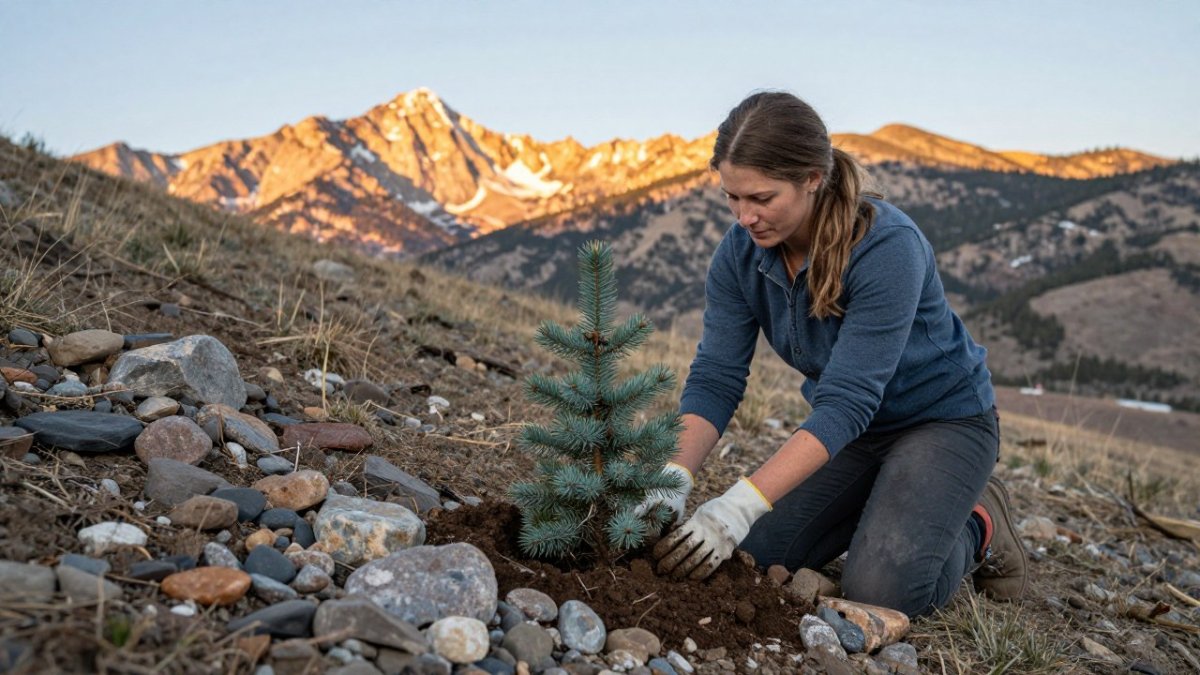
Plant new slopes early in the growing season so roots can establish before heavy rain or snow.
Watch out: skipping the drainage step and relying on plants alone to hold a steep slope often fails in the first heavy storm, water will find the weakest point and cut a gully before roots have spread.
Step 5: Layering Plants, Color and Colorado Mountain Landscape Ideas for Year-Round Interest
Good Colorado mountain landscape ideas look interesting in every season, not just summer. Layering gives you that year-round appeal.
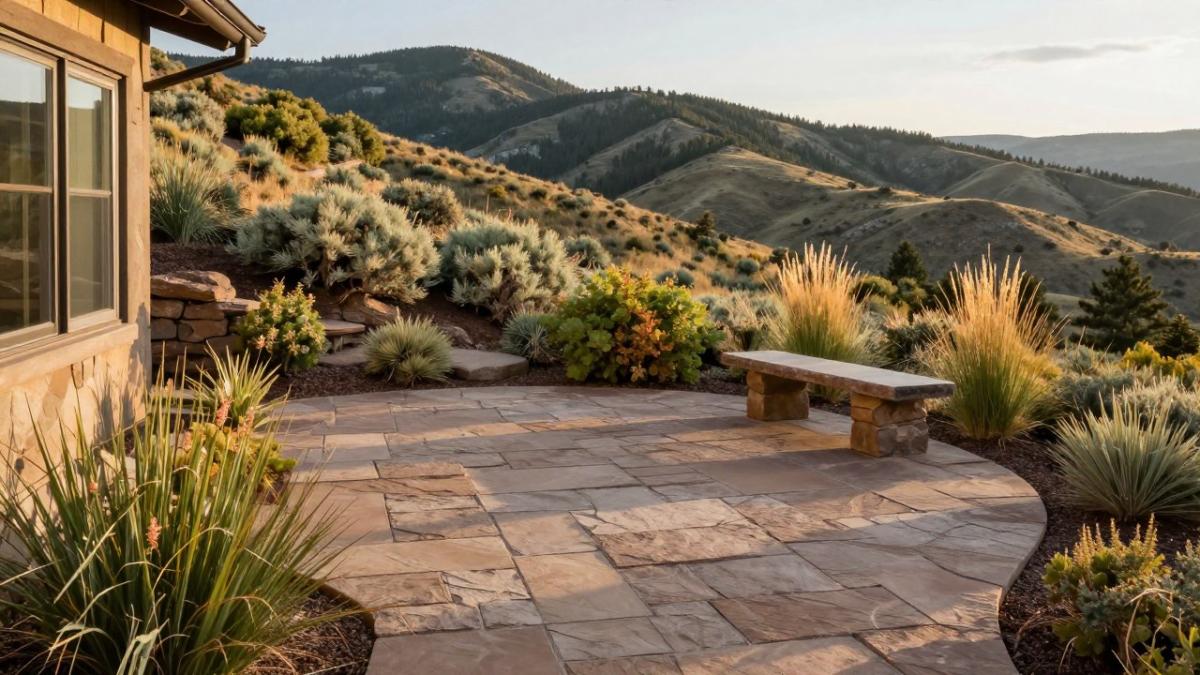
Arrange plants in three rough layers: tall trees and large shrubs at the back, mid-height shrubs and grasses in the middle, and ground covers at the front. This creates depth and a natural, unforced look.
!A stone-edged backyard terrace on a gently sloped Colorado mountain property, with layered native shrubs, ornamental grasses and a bench overlooking foothill views at golden hour
For color and interest through the year, choose plants that offer:
- Spring blooms from early flowering shrubs
- Summer color from perennials and ornamental grasses
- Fall foliage from deciduous shrubs
- Winter structure from evergreens and bark texture
Repeat a small set of plants across the garden. Repetition ties the design together and keeps it calm and intentional.
Budgeting, Phasing and Wildfire-Resilient Maintenance for Your Project
Pricing depends on site size, grading, materials and the scope of planting. For current pricing or a quote, contact Red Gate Farm Design through our website.
Start with the work that protects the site: drainage, grading and erosion control. Plant and finish work can follow in later phases.
For wildfire-resilient maintenance, keep these habits in place:
- Clear dry needles and debris from beds and near the house.
- Space shrubs so fire cannot easily travel between them.
- Water new and established plants consistently through dry periods.
- Prune trees to lift branches away from the ground.
Wildfire guidance varies by county and property. Check your local fire authority for current requirements before planting near structures.
Booking Your Site Assessment With Red Gate Farm Design in Castle Rock or Parker
A good design starts with a clear look at your land. If you own property in Castle Rock or Parker, we can walk the site with you, read the slope and sun, and outline a phased plan that fits your home.
Our projects in these areas show how mountain landscapes can feel both natural and deliberate. To see how that works on a finished property, explore our Evergreen Terrace project or review how we plan terraced sloped yards.
Ready to start? Schedule your site assessment with Red Gate Farm Design and begin planning a landscape that lasts. Call (303) 520-2694 to schedule your complimentary consultation today.
Frequently Asked Questions
Which plants work well in Colorado mountain landscapes?
Colorado mountain landscapes do best with plants adapted to cold winters, high sun, dry air and alkaline soils. Native and Colorado-adapted choices such as blue grama, little bluestem, Rocky Mountain penstemon, chokecherry and serviceberry tolerate local conditions well. Match each plant to its elevation and exposure, since a south-facing slope in Parker and a shaded north lot in Castle Rock can need different selections. Group plants by water needs so that irrigation stays efficient once the landscape is established.
How do you design a drought-tolerant Colorado landscape?
Start by grouping plants with similar water requirements into zones, placing the thirstiest plants nearest the house or a dedicated irrigation line. Use mulch, decomposed granite paths and ground covers to reduce evaporation and weed pressure. Drip irrigation on a timer is typically more efficient than spray heads for shrubs and perennials. Expect the first two growing seasons to need supplemental water, after which many native plantings can be watered far less often.
What should you consider when designing a landscape on a sloped lot?
Assess grade, drainage paths and soil stability before selecting plants. Terraces, retaining walls and deep-rooted shrubs help hold soil on steep sections, while swales and gravel beds direct runoff away from foundations. Check local requirements with your municipality before building retaining walls above a certain height, since permits and engineering rules vary by community. Phasing the work, starting with grading and drainage, prevents costly repairs later.
How can you make a yard feel like a natural mountain landscape?
Use irregular plant groupings, mix heights from ground covers to small trees, and avoid rigid geometric beds. Repeat a limited palette of native grasses, shrubs and stone so the space reads as part of the surrounding terrain. Keep views open toward the mountains or foothills, and frame them with plantings rather than blocking them. Local stone and weathered wood in paths and seating areas reinforce the connection to the site.