 listicle
How to Plan Modern Landscape Design for Parker Homes
Last Updated: November 2, 2026
Quick Summary
Modern landscape design for Parker homes uses clean geometry, restrained plant palettes, and durable hardscape to create intentional outdoor rooms built for high-desert prairie conditions. Structure comes first and plants second, with three to five repeated plant types and materials rated for freeze-thaw weather.
- Choose three to five plant types and repeat them in masses rather than rotating annual color.
- Specify natural stone, freeze-thaw rated concrete pavers, and stacked stone for retaining walls.
- Group plants by water need into hydrozones so irrigation matches each bed.
- Phase projects with hardscape and drainage first, irrigation and planting second, features third.
- Permitting and HOA review can affect project timelines for walls, grading, and drainage.
Table of Contents
- Why Modern Landscape Design Fits Parker and Castle Rock Homes
- Modern Landscaping Ideas for Front of House Curb Appeal
- Hardscape and Outdoor Living Rooms That Handle Colorado Weather
- Colorado Native Plants for Landscaping a Water-Wise Yard
- Low-Maintenance Landscaping Ideas for Busy Homeowners
- The Residential Landscape Design Process, Step by Step
- Schedule Your Complimentary Consultation
- Frequently Asked Questions
Why Modern Landscape Design Fits Parker and Castle Rock Homes
Modern landscape design is a purposeful approach to yard planning that uses clean geometry, restrained plant palettes, and durable hardscape to create outdoor rooms that feel intentional rather than decorative. For Parker and Castle Rock homeowners, that approach fits the local conditions unusually well. At Red Gate Farm Design, we design these spaces for homes in Parker and Castle Rock.
Parker and Castle Rock share a high-desert prairie character: intense afternoon sun, fast-drying soils, and winters that swing between melt and hard freeze. A fussy, water-hungry landscape fights those conditions. A modern one works with them.
The ideas below show how clean lines, geometric forms, and climate-aware planting can translate into a yard that looks composed in every season.
Modern Landscaping Ideas for Front of House Curb Appeal
The strongest front-yard modern landscapes lead with structure first and plants second. That order is what separates a designed entry from a collection of shrubs.
Clean Lines, Geometric Forms, and Defined Edges
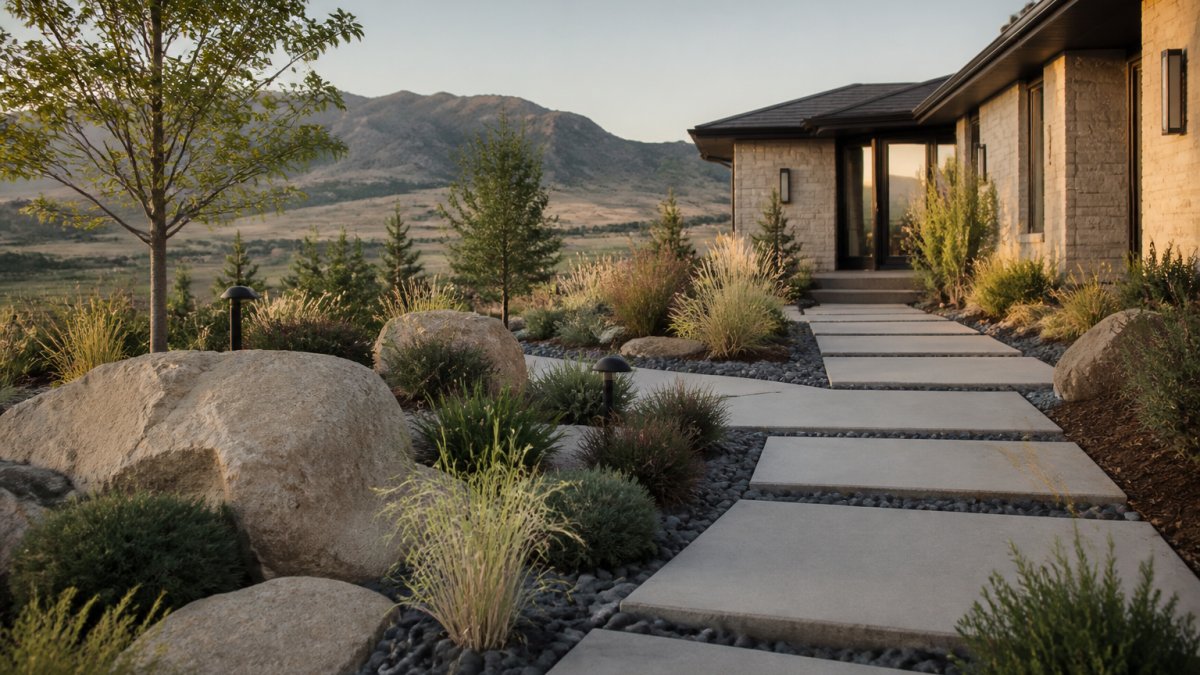
A modern front yard reads as deliberate because every element has a hard edge. Rectangular patios, straight pathways, and linear planting beds create a grid the eye can follow from the street to the door. Steel or stone edging holds those lines crisp through winter, when softer planting recedes.
Symmetry helps, but it is not mandatory. A single strong axis, such as a straight walk aligned to the entry, often does more for curb appeal than a fully mirrored plan.
Minimalist Planting and Restrained Color Palettes
Modern planting relies on repetition and texture rather than variety. Choose three to five plant types and repeat them in masses. Warm earthy tones, ornamental grasses, and a single accent tree carry the design. Seasonal interest comes from foliage and form, not from rotating annual color.
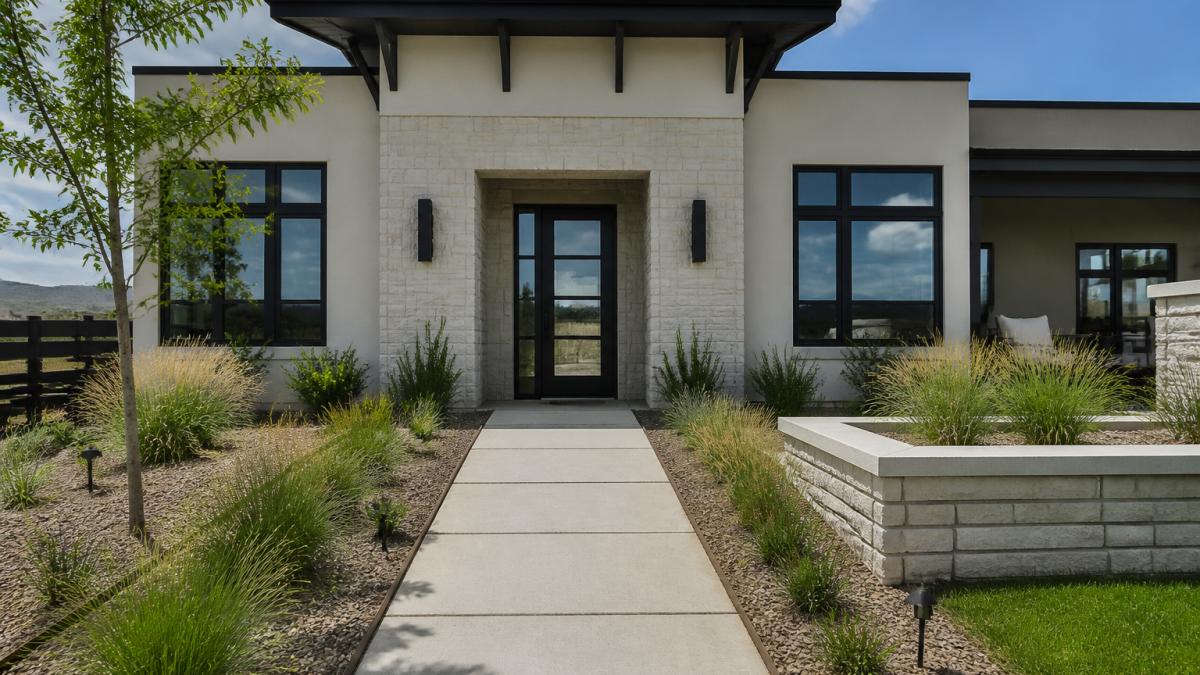
SEE OUR RECENT PROJECTS to see how clean lines and geometric forms look on real front yards in Parker and Castle Rock.
Hardscape and Outdoor Living Rooms That Handle Colorado Weather
Hardscape is the backbone of a modern Colorado yard, and material choice matters more here than in milder climates. Freeze-thaw movement, hail, and intense UV exposure punish weak construction.
We specify durable materials: natural stone, concrete pavers rated for freeze-thaw, and stacked stone for retaining walls and architectural focal points. Proper base preparation and drainage detailing matter as much as the surface. A patio that heaves or holds water erases the clean look within a season.
Defined outdoor zones turn a yard into usable rooms: a dining patio, a seating area around a fire feature, a pathway linking them. A water feature or garden structure can serve as an architectural focal point without cluttering the plan.
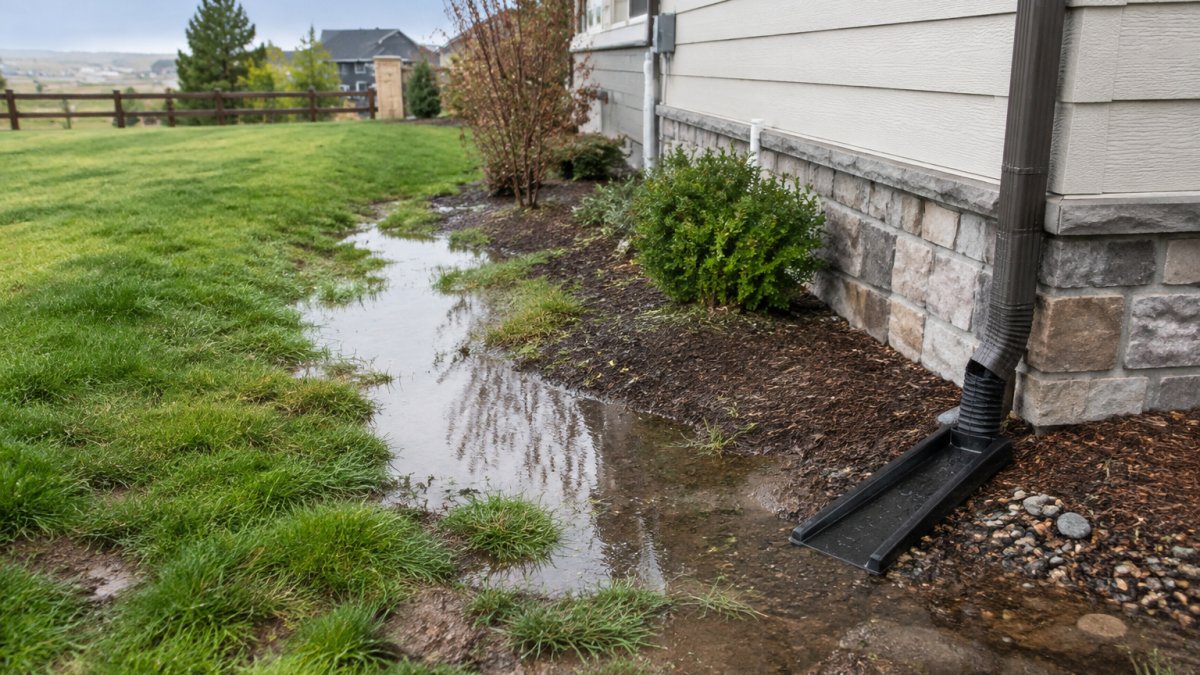
Watch out: skipping subsurface drainage because a site looks flat is a common cause of hardscape failure.
SEE OUR RECENT PROJECTS for hardscape and outdoor living spaces built for Colorado weather.
Colorado Native Plants for Landscaping a Water-Wise Yard
Native and climate-appropriate plants are the practical answer to water budgeting in Parker and Castle Rock. Once established, species adapted to the Front Range need far less supplemental irrigation than traditional lawn-heavy designs. The trick is choosing plants that match the specific conditions on your lot, not just the general region.
Parker and Castle Rock sit at different elevations and expose different soil profiles. Soil conditions can vary between sites in Parker and Castle Rock, and that difference can change both plant selection and irrigation design. A plant that thrives in a Castle Rock bed may struggle in a Parker clay pocket unless the soil is amended and the zone is watered differently.
SCHEDULE YOUR COMPLIMENTARY CONSULTATION TODAY (303)-520-2694 →
A short list of water-wise, low-maintenance planting options, organized by role in the design:
- Ornamental grasses, blue grama, little bluestem, and switchgrass for movement and winter structure. Most reach 18-36 inches and tolerate reflected heat from pavement.
- Native shrubs, rabbitbrush, native sage, and leadplant for texture and color. Space them at their mature spread (often 3-5 feet) so they do not crowd walkways or block windows.
- Accent trees, consider bur oak, Gambel oak, or a well-sited honeylocust for form and filtered shade rather than fast growth. Match the tree to the available root space and overhead clearance.
- Perennials, penstemon, yarrow, and blanket flower grouped in layered beds for pollinator value and repeat bloom.
Group plants by water need, then zone the irrigation to match. That single step does more for conservation than any plant swap. A common pattern is three hydrozones: a low-water zone for native beds, a moderate zone for accent plantings near the entry, and a separate drip zone for containers and any remaining turf. Local water providers publish current guidance on outdoor watering schedules.
Watch out: planting a native species without improving compacted or caliche-heavy soil can keep a water-wise bed from filling in.
Low-Maintenance Landscaping Ideas for Busy Homeowners
Low-maintenance landscaping ideas start with reducing the number of decisions a yard demands. Fewer plant types, larger masses, and hard edges mean less trimming, less replanting, and less seasonal fuss.
- Replace thirsty lawn areas with native beds and gravel mulch
- Use drip irrigation on separate zones with a smart controller
- Choose plants sized for their mature spread so pruning stays minimal
- Design for winter structure so the yard looks intentional under snow
A common mistake is treating low-maintenance as no-maintenance. Every landscape needs seasonal attention, especially after hail or heavy snow. The goal is fewer, simpler tasks.
The Residential Landscape Design Process, Step by Step
A residential landscape design process typically moves from site review to installation in a defined sequence. In Parker and Castle Rock, that sequence also has to account for local permitting, HOA review, drainage requirements, and the reality that many homeowners phase work over more than one season.
- Consultation and site review. A site review can cover sun, wind, drainage, and how the house sits on the lot.
- Concept and direction. A design direction can be tailored to your architecture and how you want to use the outdoors.
- Design development. Materials, plant selection, and layout can be refined into a buildable plan.
- Installation. Craftsmanship carries the design from drawing to finished space.
Permitting and HOA review can affect project timelines, and retaining walls, significant grading, and drainage alterations may require approval.
Phasing can be a practical approach for some projects, and one common sequence is hardscape and drainage first, irrigation and planting second, and outdoor living features third.
Every project is tailored to the specific lot and home. DESIGN, CURATE, EXPERIENCE to see how our design process works from first conversation to completed landscape.
Here is the sequence a residential landscape design project typically follows, along with the local reviews that can affect timing.
| Step | What happens |
|---|---|
| Consultation and site review | Covers sun, wind, drainage, and how the house sits on the lot |
| Concept and direction | Design direction tailored to architecture and outdoor use |
| Design development | Materials, plant selection, and layout refined into a buildable plan |
| Installation | Craftsmanship carries the design from drawing to finished space |
| Permitting and HOA review | Can affect project timelines; walls, grading, drainage may need approval |
| Phasing | Hardscape and drainage first, irrigation and planting second, features third |
Schedule Your Complimentary Consultation
Modern landscape design rewards homeowners who plan for climate, materials, and long-term maintenance from the start. The difference between a yard that looks dated in a few years and one that holds its composure comes down to structure, restraint, and craftsmanship.
Red Gate Farm Design brings bespoke residential design, an eye for Colorado architecture, and a focus on timeless, quietly luxurious outdoor spaces to homes in Parker and Castle Rock.
Frequently Asked Questions
What are the latest modern landscape design trends for homes?
Clean lines and geometric forms lead the list, followed by minimalist planting with restrained color palettes, rectangular patios, linear planting beds, and defined edges between lawn, gravel, and stone. Outdoor living rooms with fire features and built-in seating remain popular, and water-wise planting with native and climate-appropriate species is now standard rather than optional. Warm earthy tones in stone and gravel keep modern yards from feeling cold. In Parker and Castle Rock, the strongest trend is pairing that clean geometry with plants and hardscape that survive freeze-thaw cycles, hail, and dry summers.
What plants work well in a Colorado landscape?
Native and adapted plants outperform most traditional garden choices along the Front Range. Consider native grasses like blue grama and little bluestem, perennials such as penstemon, yarrow, and blanket flower, and shrubs like rabbitbrush and native sumac for seasonal interest. Accent trees such as gambel oak or a well-sited maple add structure. These plants handle lean soil, intense sun, and low water once established. Group them by water need so irrigation zones stay efficient, and add a layer of mulch to moderate soil temperature through freeze-thaw swings.
How can I make a small front yard look modern?
Start with a single strong focal point, such as one accent tree or a sculptural boulder, then repeat a limited plant palette around it. Straight pathways and rectangular beds make a small yard read as larger and more intentional than curved, busy layouts. Replace lawn with gravel or low groundcover to reduce maintenance, and use a consistent hardscape material so the eye is not broken up. Defined edges between materials do most of the visual work in small spaces. Keep ornament to a minimum and let texture and form carry the design.
What should I consider before hiring a landscape designer?
Ask how the designer handles Colorado-specific issues: drainage, soil, freeze-thaw, and water budgeting. Request references from projects in Parker or Castle Rock with lots similar to yours, and ask to see how a design evolved from concept to built yard. Confirm the residential landscape design process up front, including how revisions work and what happens if you want changes mid-project. A designer should also explain how the plan stays timeless rather than trend-driven, and how it will be phased if you want to build over more than one season.
Ready to elevate your outdoors? SCHEDULE YOUR COMPLIMENTARY CONSULTATION with Red Gate Farm Design and turn your yard into an intentional, enduring retreat.